Advanced · 6.0 litres · Icewine
Vidal icewine
Grapes picked and pressed frozen, so the water stays behind as ice in the press and only syrup runs out. A tiny yield, a ferment that takes months, and the most concentrated thing you will ever make.
Starting sugar
36.0 Brix
2.50 kg of fermentable sugar
Original gravity
1.159
from the ingredients, not asserted
Finishing gravity
1.070
sweet
Alcohol
11.6%
Brix alone predicts 19.8 to 21.6%
Residual sugar
195 g/L
approximate, from gravity
Ready after
12 months
best around 20 years
Made to Icewine, and every computed figure lands inside the published range for it.
ABV inTA inpH inRS inWhat decides this wine
Patience measured in seasons. At 36 Brix the fermentation is slow, stops around 11% alcohol with most of the sugar still there, and that is the intended outcome rather than a stuck ferment. Do not try to push it further.
What goes in
| Ingredient | Weight | Sugar | Volume | Share of sugar |
|---|---|---|---|---|
| Vidal Blanc36.0 Brix (picked off the midpoint) Forty kilograms of frozen fruit gives about six litres of juice. The yield is roughly a fifth of a normal press, which is why the wine costs what it does. | 40.00 kg | 2.50 kg | 6.00 L | 100% |
| Yeast nutrient In stages. A 36 Brix must is osmotically brutal and the yeast needs help from the first day. | 20 g | - | - | 0% |
The ingredients contribute 6.0 litres and the water makes up the rest to 6 litres. Those figures are checked against each other when the site is built, because a recipe whose volumes do not add up produces a wine weaker or stronger than every number above.
Acid and sulphite
Acidity of the must
11.0 g/L
at pH 3.25
No malolactic
11.0 g/L
the acidity you measure is the acidity you keep
Potassium bicarbonate
7 g
to reach 10.0 g/L. Bench trial before treating the batch
Sulphite at bottling
0.3 g
potassium metabisulphite, for 26 mg/L free SO2 at pH 3.30
The batch
- Must volume
- 6 L
- Ferment at
- 12-18 C
- Molecular SO2 target
- 0.8 mg/L
- Malolactic
- No
- Yeast
- EC-1118to 18%, low N
The sulphite figure is worked out against the pH of the finished wine, not of the must. Malolactic and deacidification both raise pH, and dosing a finished red to its must pH under-protects it by roughly a third. Recompute for your own reading.
Method
- 01Pick and press while the fruit is frozen solid, ideally below minus 8C. If it thaws you have made a late harvest wine instead.
- 02Settle the juice cold and rack. Expect it to be viscous and slow.
- 03Build a large EC-1118 starter and acclimatise it to the must in stages over several hours rather than pitching straight in.
- 04Ferment at 12 to 18C with staged nutrient. It will take two to four months.
- 05When it stops, confirm it has stopped: two readings a fortnight apart.
- 06Sulphite, sorbate, cold stabilise and filter. Bottle in small bottles; nobody drinks this by the glass.
The two instruments this recipe needs
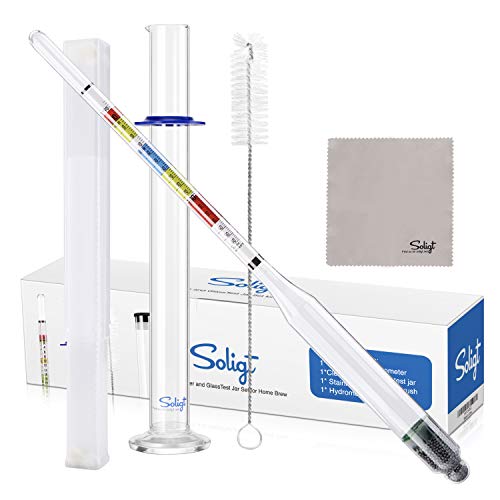
Every number on this page came from a hydrometer reading and a pH reading. Without those two you are following a recipe rather than making a wine, and the sulphite figure in particular is meaningless without a pH you have actually measured.
Measuring
Hydrometer and trial jar
SOLIGT Triple Scale Hydrometer and Glass Test Jar for Wine, Beer, Mead & Cider - ABV, Brix and Gravity Test Kit
$18.98
Tracks the ferment from must to dry. The gap between your starting and finishing gravity is the only reliable way to know the alcohol you actually made.

Measuring
pH meter
Apera Instruments AI1113 pH Calibration Buffer Solution Kit (7.00, 4.00), 8 oz. Each
$18.00
The most important instrument on this page. pH decides how much of your sulphite is actually protecting the wine, and dosing without knowing it is guesswork.