Some experience · 23.0 litres · Full-bodied dry red
Cabernet Sauvignon
The long-maceration red: two weeks on the skins, malolactic through the winter, and a year in bulk before it is worth looking at. Everything about it is a decision to wait.
Starting sugar
24.9 Brix
6.33 kg of fermentable sugar
Original gravity
1.105
from the ingredients, not asserted
Finishing gravity
0.995
dry
Alcohol
14.5%
Brix alone predicts 13.7 to 14.9%
Residual sugar
0 g/L
approximate, from gravity
Ready after
18 months
best around 5 years
Made to Full-bodied dry red, and every computed figure lands inside the published range for it.
ABV inTA inpH inRS inWhat decides this wine
Cap management. The skins float and dry out, and the colour and tannin you paid for are in them. Punch down or pump over three times a day for the whole of the active ferment, and stop when the fruit tastes right rather than when the calendar says so.
What goes in
| Ingredient | Weight | Sugar | Volume | Share of sugar |
|---|---|---|---|---|
| Cabernet Sauvignon24.5 Brix Around 36 kg of fruit gives 23 litres of wine after pressing and the racking losses. | 36.00 kg | 6.33 kg | 23.40 L | 100% |
| Oak chips or cubes Medium-toast cubes in the secondary, tasted every fortnight from month two. | 50 g | - | - | 0% |
The ingredients contribute 23.4 litres and the water makes up the rest to 23 litres. Those figures are checked against each other when the site is built, because a recipe whose volumes do not add up produces a wine weaker or stronger than every number above.
Acid and sulphite
Acidity of the must
7.0 g/L
at pH 3.55
After malolactic
5.0 g/L
malolactic takes roughly 2 g/L with it
Tartaric to add
23 g
to reach 6.0 g/L. Bench trial before treating the batch
Sulphite at bottling
1.6 g
potassium metabisulphite, for 39 mg/L free SO2 at pH 3.70
The batch
- Must volume
- 23 L
- Ferment at
- 24-28 C
- Molecular SO2 target
- 0.5 mg/L
- Malolactic
- Yes
- Yeast
- D80to 16%, medium N
The sulphite figure is worked out against the pH of the finished wine, not of the must. Malolactic and deacidification both raise pH, and dosing a finished red to its must pH under-protects it by roughly a third. Recompute for your own reading.
Method
- 01Destem and crush. Take a Brix, a pH and a TA reading of the must before you touch anything else.
- 02Sulphite the must lightly, around 50 mg/L, and leave it four hours before pitching.
- 03Pitch and ferment on the skins at 24 to 28C, punching down three times a day.
- 04Press at or just after dryness. Press gently: the hard press fraction is astringent and worth keeping separate.
- 05Inoculate for malolactic and keep it at 20C until it finishes. Do not sulphite until it has.
- 06Rack off the gross lees, top up completely, and add the oak. Taste it every fortnight and pull the oak when it is right, not when the bag is empty.
- 07Bulk age a year, racking every three months, then bottle.
The two instruments this recipe needs
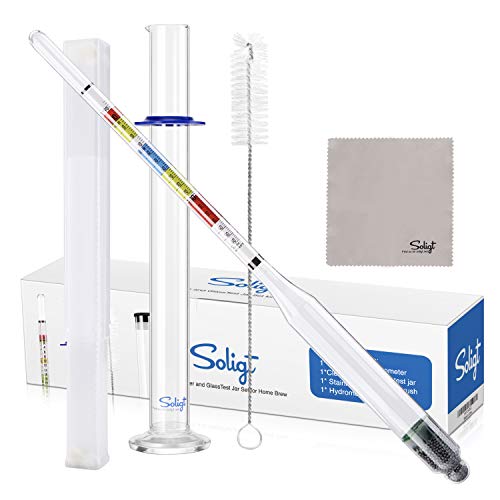
Every number on this page came from a hydrometer reading and a pH reading. Without those two you are following a recipe rather than making a wine, and the sulphite figure in particular is meaningless without a pH you have actually measured.
Measuring
Hydrometer and trial jar
SOLIGT Triple Scale Hydrometer and Glass Test Jar for Wine, Beer, Mead & Cider - ABV, Brix and Gravity Test Kit
$18.98
Tracks the ferment from must to dry. The gap between your starting and finishing gravity is the only reliable way to know the alcohol you actually made.

Measuring
pH meter
Apera Instruments AI1113 pH Calibration Buffer Solution Kit (7.00, 4.00), 8 oz. Each
$18.00
The most important instrument on this page. pH decides how much of your sulphite is actually protecting the wine, and dosing without knowing it is guesswork.