Straightforward · 11.2 litres · Vermouth
Sweet vermouth
A neutral base wine, fortified, sweetened and infused with botanicals of which wormwood is the one the name comes from and the law requires. An afternoon's work once the base wine exists.
Starting sugar
20.5 Brix
2.34 kg of fermentable sugar
Original gravity
1.085
from the ingredients, not asserted
Finishing gravity
0.995
dry
Alcohol
17.0%
after fortification
Residual sugar
80 g/L
approximate, from gravity
Ready after
1 months
best around 2 years
Made to Vermouth, and every computed figure lands inside the published range for it.
ABV inTA inpH inRS inWhat decides this wine
Infusing each botanical separately and blending at the end. Steeping everything together in one jar gives you one chance to get the balance right and no way to correct it; separate tinctures let you build the recipe by tasting.
What goes in
| Ingredient | Weight | Sugar | Volume | Share of sugar |
|---|---|---|---|---|
| Trebbiano20.5 Brix (picked off the midpoint) Neutral on purpose. The base wine is a carrier, and anything characterful in it fights the botanicals. | 15.00 kg | 2.34 kg | 10.50 L | 100% |
| Wormwood Two grams per litre and no more. Wormwood goes from bitter to inedible over a very short distance. | 20 g | - | - | 0% |
| Ginger root | 30 g | 0.00 kg | - | 0% |
The ingredients contribute 10.5 litres and the water makes up the rest to 10.5 litres. Those figures are checked against each other when the site is built, because a recipe whose volumes do not add up produces a wine weaker or stronger than every number above.
Acid and sulphite
Acidity of the must
6.5 g/L
at pH 3.30
No malolactic
6.5 g/L
the acidity you measure is the acidity you keep
Potassium bicarbonate
6 g
to reach 6.0 g/L. Bench trial before treating the batch
Sulphite at bottling
0.5 g
potassium metabisulphite, for 29 mg/L free SO2 at pH 3.35
The batch
- Must volume
- 10.5 L
- Ferment at
- 16-20 C
- Molecular SO2 target
- 0.8 mg/L
- Malolactic
- No
- Fortify at
- 0.995
- Spirit
- 0.69 L at 96%
- Final volume
- 11.19 L
- Yeast
- EC-1118to 18%, low N
The sulphite figure is worked out against the pH of the finished wine, not of the must. Malolactic and deacidification both raise pH, and dosing a finished red to its must pH under-protects it by roughly a third. Recompute for your own reading.
Method
- 01Press, settle and ferment the base wine dry at 16 to 20C.
- 02Make a separate tincture of each botanical: cover with neutral spirit, leave a week, and strain.
- 03Fortify the base wine to 17% with neutral spirit.
- 04Make a rich syrup and sweeten to about 80 g/L, or to your own taste.
- 05Blend the tinctures in a small measured sample first, note the ratios, then scale them to the batch.
- 06Rest a month before drinking, and refrigerate once opened: it is a wine, and it oxidises like one.
The two instruments this recipe needs
Every number on this page came from a hydrometer reading and a pH reading. Without those two you are following a recipe rather than making a wine, and the sulphite figure in particular is meaningless without a pH you have actually measured.
Measuring
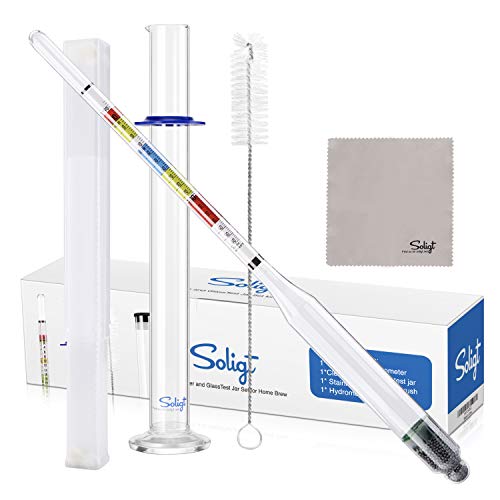
Hydrometer and trial jar
SOLIGT Triple Scale Hydrometer and Glass Test Jar for Wine, Beer, Mead & Cider - ABV, Brix and Gravity Test Kit
$18.98
Tracks the ferment from must to dry. The gap between your starting and finishing gravity is the only reliable way to know the alcohol you actually made.

Measuring
pH meter
Apera Instruments AI1113 pH Calibration Buffer Solution Kit (7.00, 4.00), 8 oz. Each
$18.00
The most important instrument on this page. pH decides how much of your sulphite is actually protecting the wine, and dosing without knowing it is guesswork.